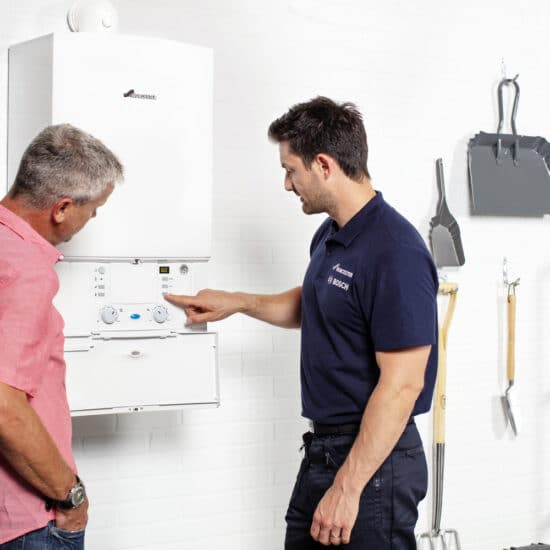
Installing a boiler can be a big task for any household and can often end up being a stressful situation without the right knowledge or advice.
We’ve put together this article detailing the boiler installation process in a simple guide format to make it easier for our customers to understand.
This guide covers everything about a boiler installation and what points you should consider before and after an installation in your home. But firstly, let’s understand some basic facts about the boiler.
How many types of boilers are there?
There are three main types of boilers, namely, conventional or regular, combi, and system. Choosing the most suitable boiler for your home depends on the boiler room space you have available, the gas connection, your hot water needs and the efficiency you expect from the boiler.
Installing the same boiler as you had previously can make the job easier, but sometimes switching to a new energy-efficient boiler can overcome previous issues you may have experienced with the boiler you are looking to replace.
When should you replace your boiler?
The average life of a boiler is between 10-15 years. You can replace the boiler towards the latter end if servicing has been kept up at regular intervals. You should start saving for the next boiler if it is approaching 15 years, or a bit earlier if things are starting to go wrong.
On that note, if your boiler fails to perform up to the mark, this could also be a sign it’s time for a change, instead of spending good money on repair after repair. Other signs you may need a new boiler include increase in heating bills, popping and other noises from the boiler, or boiler working intermittently.
Old unit removal
Now if you have decided to replace your old boiler, then the first thing to do is remove the old one. Again, for safety purposes, it is always recommended you hire registered professionals for this work. A qualified Gas Safe engineer knows how to break the gas feed safely before capping it so that the unit will no longer be a working one. Our professionals also take care of water valves to isolate the water supply from the boiler and may remove the gas pipe if it is no longer in use. All these factors depend on the type of boiler and its location at your home.
What is the perfect boiler size for you?
Although your trusted boiler installation engineer will guide you on this, getting knowledge of such things yourself is always good to know.
Ask the below questions before picking any boiler.
How much water do you need?
It depends on your family size. In the case of the large family, your water usage will be much more, and a conventional boiler may be the best choice in this case. As conventional boilers are suitable for higher water demand and a combi boiler is a perfect match for lower usage.
How much space do you have for the boiler?
If you don’t have much space for the boiler, then a combi boiler is a good choice as it doesn’t require a hot water cylinder.
Where do you want to keep the boiler?
For an easy and smooth boiler installation it is often recommended the new boiler is fitted in the existing location of your old one. However, it’s not compulsory. You can put it anywhere as long as you have suitable pipework and can position the flue appropriately. A good heating engineer will always advise you of the best options available to you.
Installation
Once a suitable boiler has been chosen, it must be fitted by a qualified gas engineer who can install it safely. At West Sussex Heating, all of our engineers are Gas Safe registered, and fully insured to carry out your boiler installation safely and efficiently.
We’re specialists! New boiler installation in West Sussex is what we do, day in and day out. Since 2010 we have dedicated our work solely to boiler installation and boiler installation services and have a vastly experienced team of proficient engineers who can complete your boiler installation quickly and with minimum fuss.
The price and installation time depend on the type of boiler. Most of the time boiler removal and installation occurs on the same day. The engineer will install the boiler in the specified space and will make connections of pumps, pipe, cold water supply and water outlets. In the case of regular boilers instead of the combi boiler, the engineer may fit the cold and hot water tanks. Our reputed boiler service in West Sussex can install all types of boilers at your home, and we have gained popularity in this field because of our affordable, yet award-winning services.
Testing
Congratulations on a new and shining boiler. Now, the next step is to check it properly. For proper testing, wait until your boiler becomes cool and turn the thermostat to 0. Turn off hot water and switch on the thermostat to check the boiler flares. Check the radiators (if possible all) after 10 minutes and make sure that the boiler is heated evenly at the top and bottom. If everything is perfect, you are good to go! Turn the thermostat off and enjoy the toasty warmth.
Testing of a combi boiler is even more simple, turn the hot taps on, and they should warm up steadily.
We understand you need safe hands when it comes to your boiler installation and by bringing over two decades worth of experience to the table, we make the boiler installation process as smooth an easy as possible.
If you are looking to replace your boiler, get in touch today for a free quote.